
Understanding the complete profile of the cannabis plant requires examining compounds beyond primary cannabinoids like CBD and THC. Among the most critical components are terpenes: volatile organic compounds responsible for the diverse aromatic profiles across different strains.
What Are Terpenes?
Terpenes are a large and diverse class of organic compounds, produced by a variety of plants, and are the primary constituents of essential oils. In nature, these compounds serve vital functions, including plant defense (repelling herbivores and insects), pollination (attracting specific pollinators), and environmental protection (providing resilience against high temperatures and potential fungal breakdown).
Terpene Production and the ‘Entourage Effect’
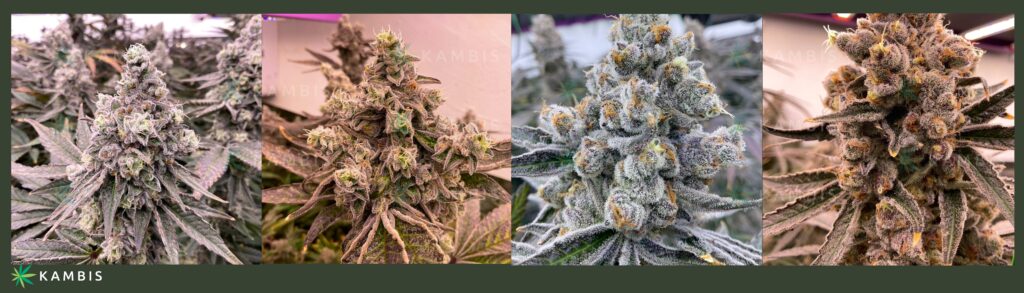
In cannabis, terpenes are synthesized and stored within the trichomes, which are the crystalline resin glands that cover the surface of mature flowers and leaves. They are produced in the same secretory cells as cannabinoids. The presence of terpenes is fundamental to the “Entourage Effect.” This pharmacological concept suggests that whole-plant extracts, which contain a full spectrum of compounds including cannabinoids, terpenes, and other minor compounds are more effective for medicinal purposes than isolated cannabinoids. The specific terpene profile modifies and shapes the overall effect of a strain.
Analysis of Common Cannabis Terpenes
There are over 100 identified terpenes in cannabis plants, each contributing to a unique profile. To provide actionable knowledge, we examine four common terpenes often identified in analysis:
1. Myrcene
- The most abundant terpene found in modern cannabis.
- Aroma Profile: Earthy, musky, with subtle hints of clove.
- Primary Natural Sources: Mangoes, lemongrass, thyme.
2. Limonene
- Aroma Profile: Potent citrus, bright, and vibrant.
- Primary Natural Sources: Citrus fruits (lemon, orange), peppermint.
3. Pinene
- Aroma Profile: Sharp, fresh, characteristic of a pine forest.
- Primary Natural Sources: Pine needles, rosemary, basil, parsley.
4. Linalool
- Aroma Profile: Delicate floral, lavender, with a hint of spice.
- Primary Natural Sources: Lavender, coriander, rosewood.
Trichome vs Resin Head vs Terpenes
To understand the difference, think of the plant as a factory. The trichome is the building, the resin head is the storage vault, and the terpenes are one of the specific products kept inside.
# Trichome: A trichome is a general botanical term for any hair-like outgrowth on a plant’s surface. In cannabis, they are complex glandular structures. When you see a “frosty” bud, you are looking at thousands of individual trichomes. It functions as the plant’s defense system, reflecting UV light and producing sticky substances to deter pests.
# Resin Head: Technically called the capitate-stalked glandular head, this is the bulb at the very top of the trichome. This is the specific site of biosynthesis, where cannabinoids (THC, CBD) and terpenes are secreted into a storage cavity. When we talk about microscopic analysis for harvesting, we are specifically looking at the color of the resin head because it tells us the status of its contents.
# Terpenes: The volatile organic chemical compounds (aromatic hydrocarbons) found inside the resin head. They provide the plant with its unique aroma and flavor profile. In humans, they modulate the effects of cannabinoids—a phenomenon known as the Entourage Effect.