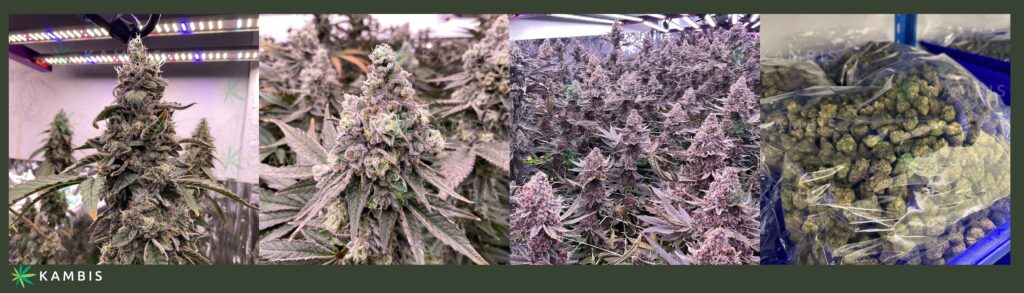
At KAMBIS, excellence isn’t an accident but a rigorous process governed by expertise and pharmaceutical standards. Our daily inspections ensure that every stage meets the highest industry benchmarks. Here is how we guide each plant from our farm to patients:
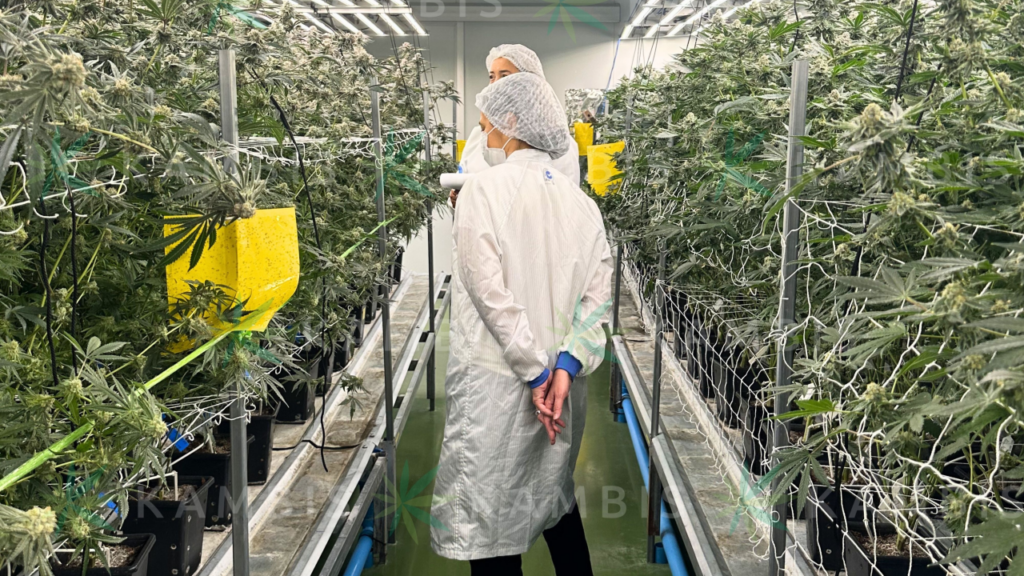
01 | Cloning Phase
Our process begins with genetic integrity. We cultivate clones from select mother plants within a sterile environment. We use a standardized labeling system to avoid cross-contamination. By prioritizing phenotypic stability, we ensure only the healthiest specimens transition to the next phase of growth.
02 | Vegetative Phase
During this period of rapid growth, our focus is on building a strong foundation. By optimizing light exposure and nutrient delivery, we maximize the development of extensive root systems, sturdy stems and lush leaves. The recommended photoperiod for the vegetative stage typically ranges from 18 to 24 hours of light. Though, an 18/6 light to dark cycle remains the industry standard for maintaining biological vigor and operational efficiency. This phase lasts around 4-8 weeks.
03 | Flowering Phase
As we transition to the flowering stage, the plant shifts its energy from structural development to reproductive growth. We meticulously re-calibrate the light cycles, humidity, and CO₂ levels to stimulate the production of cannabinoid-rich trichomes and complex terpene profiles, ensuring peak therapeutic expression. The photoperiod for the flowering stage is usually a 12/12 light to dark cycle. This phase lasts around 8-12 weeks.
04 | Defoliation
Defoliation is a common practice in cannabis cultivation in both Vegetative and Flowering stages, but the goals and techniques differ significantly. By strategically removing specific foliage, we maximize growth quality within our controlled environment. This process facilitates light penetration to the lower canopy and enhances airflow, eliminating the stagnant air pockets that often harbor excess humidity and pathogens.
While we acknowledge the industry rules of thumb, such as the 20–30% limit and a health-first approach (only defoliate plants in peak condition), the reality is that mastery requires a combination of science and art. It is a practice our farm has perfected to ensure every plant reaches its optimal growth potential.
05 | Netting
Trellis netting is typically installed during two distinct windows of the plant’s life cycle. The first net is utilized during the Vegetative Phase. Our goal here is to train the plant to spread their branches horizontally. This technique creates a flatter, denser, and more even canopy, ensuring light access for all growth sites. The second net is applied for structural support during the Flowering Phase. As cannabis plants often double in height and develop massive, resin-heavy buds, this layer prevents branches from leaning or snapping under their own weight.
Timing is essential. Installing nets too early can disrupt vital inspections and defoliation, particularly at the base of the plant (Lollipopping). Conversely, nets installed too late risk breaking fragile branches or damaging the developing buds. At KAMBIS, we have a dedicated team of growers specifically trained in netting techniques to ensure maximal growth and structural integrity.
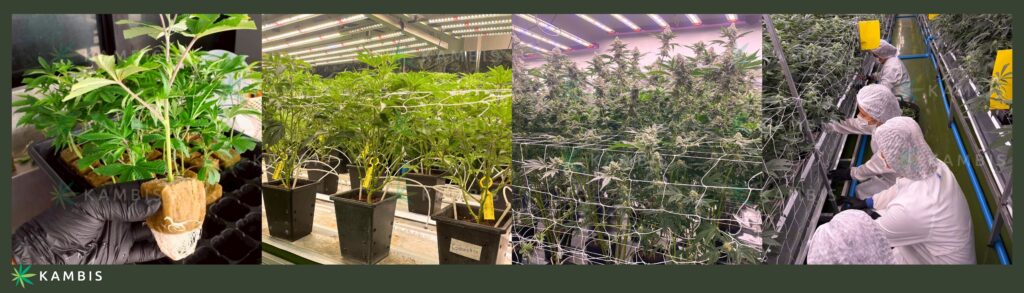
06 | Targeted Harvest
Harvesting is a high-precision event. Timing is determined by microscopic analysis. We identify the exact window of peak maturity to harvest, preserving the integrity of volatile compounds. Monitoring the transition of the glandular trichomes from crystal clear to a milky opalescence is an integral part of such process. If harvested too early, the chemical profile may still be underdeveloped. If harvested too late, the primary cannabinoids may begin to degrade. Our methodology prioritizes the preservation of these compounds.
07 | Post-Harvest Processing
Quality is refined after the harvest. Through a carefully designed drying and curing processes, we allow the plant’s chemical profile to stabilise. At KAMBIS, we utilize a slow, climate-controlled drying process to meticulously remove moisture without damaging the fragile glandular trichomes. By maintaining a specific environment, typically around 15-20°C and 50-60% relative humidity, we prevent the volatile terpenes from evaporating while ensuring the internal moisture of the flower migrates evenly to the surface. The result is an exponential increase in the final aromatic complexity and medicinal efficacy.
08 | Trimming
The trimming process is another critical step after harvesting. This is where aesthetics, potency, and smoothness come together. There are two main methods of trimming: Wet Trimming and Dry Trimming. Wet Trimming is done immediately after harvesting, before the drying process. This is often faster and easier as leaves are plump and extend outward. Removing the leaves this way may help the buds dry faster. Whereas, Dry Trimming is done after the entire harvested plant is hung dry. This is widely considered the superior method for terpene preservation. However, it is much harder to perform physically. At KAMBIS, our experienced trimmers hand trim the plants post drying with intense precision to avoid damaging the trichomes.
09 | Analytical Validation
Before any batch leaves KAMBIS, it is subjected to a rigorous Certificate of Analysis (COA) protocol through independent, third-party laboratory testing. Through the use of high-performance liquid chromatography (HPLC), the plant’s chemical makeup is mapped. This ensures that every product is accurately labeled with its specific concentration of cannabinoids. Our commitment to purity means going beyond basic potency. We subject every batch to a comprehensive screening to ensure a total absence of microbial, heavy metal and residual solvent contaminants.